Outbound Messaging
Part of Sales development qualification
Asking about constraints without forcing a rigid script
Explore systems, resources, decision roles and timing through relevant follow-up questions instead of a fixed qualification script.
Ask about constraints when they help answer a real fit question, then let the prospect’s answer shape the follow-up. A qualification framework can remind you to cover resources, requirements, timing and decisions. Reading those topics in a fixed order can miss the constraint the prospect considers decisive.
Follow the thread they give you
Start with the problem or goal they have described. Explain why a constraint matters before asking about it. For example, if your service needs access to a particular system, say you need to check the connection early so you do not suggest an approach that cannot work. Ask which systems are involved and whether any connection is prohibited.
A useful pattern is context → reason → question → clarification. It gives the prospect a chance to correct your premise. If they say the system cannot be changed, ask whether that means the system itself must stay or that no data can move in or out.
Those answers lead to different fit decisions. Do not assume either is negotiable.
Cover the constraints that affect the next step
Select from these areas as the conversation warrants:
- Operating requirements:Which process, system or policy must an option work within?
- People and decisions:Who would use the result, assess the option and approve a change?
- Resources:What work or spending could the team realistically consider? If exact funding is unknown, who would decide whether to seek it?
- Timing:Is there a deadline, a review date or another event that determines when a change could happen?
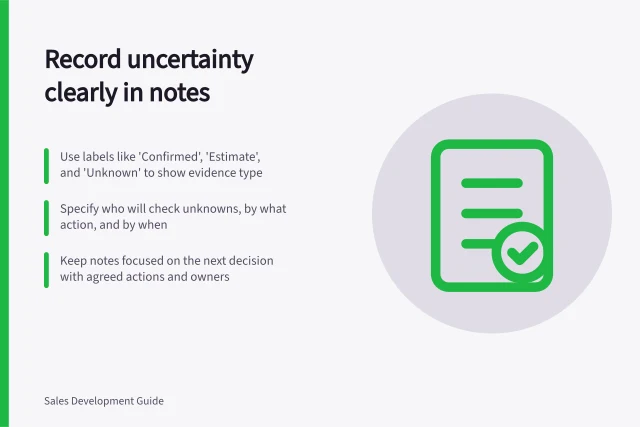
The aim is to learn whether a next step is sensible. A person who has only asked an initial question may know an operational requirement but not the budget. Record that limit rather than pressing them to guess.
Key constraints to cover when assessing fit
- Operating requirementsWhich systems, processes or policies must the solution work within?
- People and decisionsWho will use, assess and approve the change?
- ResourcesWhat budget or effort can the team realistically commit to?
- TimingIs there a deadline, review date or event influencing implementation?
Distinguish a hard limit from an open question
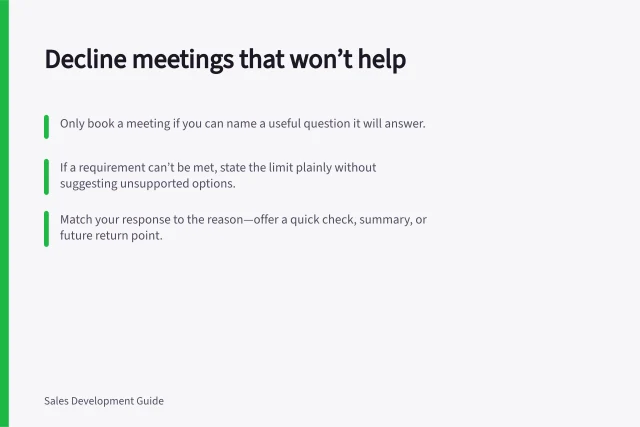
A confirmed requirement your offer cannot meet is a reason to say so. “We cannot use an external hosting service” matters differently if your offer has no suitable deployment option than if the prospect is still checking the rule. Mark the first as a mismatch if the rule is confirmed, and the second as unverified. Do not promise an exception or future capability to keep a meeting alive.
If a constraint is sensitive or the person is not ready to discuss it, explain the decision it affects and offer a narrower way forward. You might provide the relevant technical requirements for their own review, or ask whether a specialist should join a later discussion. Accept a decline.
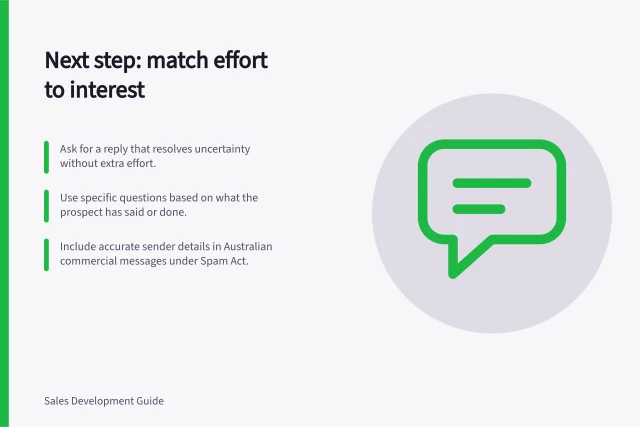
Close by reflecting the constraint in plain language and asking if you understood it correctly. The next action should resolve a named uncertainty.
Hard limits vs. open questions: How to respond appropriately
- Hard Limit (Confirmed)
- Offer cannot meet requirement → mark as mismatch
- Open Question (Unverified)
- Rule under review → keep as pending, do not promise exceptions