Deliverability
Part of Sales development qualification
Rejecting a meeting that is unlikely to help either side
Check purpose, fit and participants before booking a meeting, then offer a useful alternative when the meeting will not help.
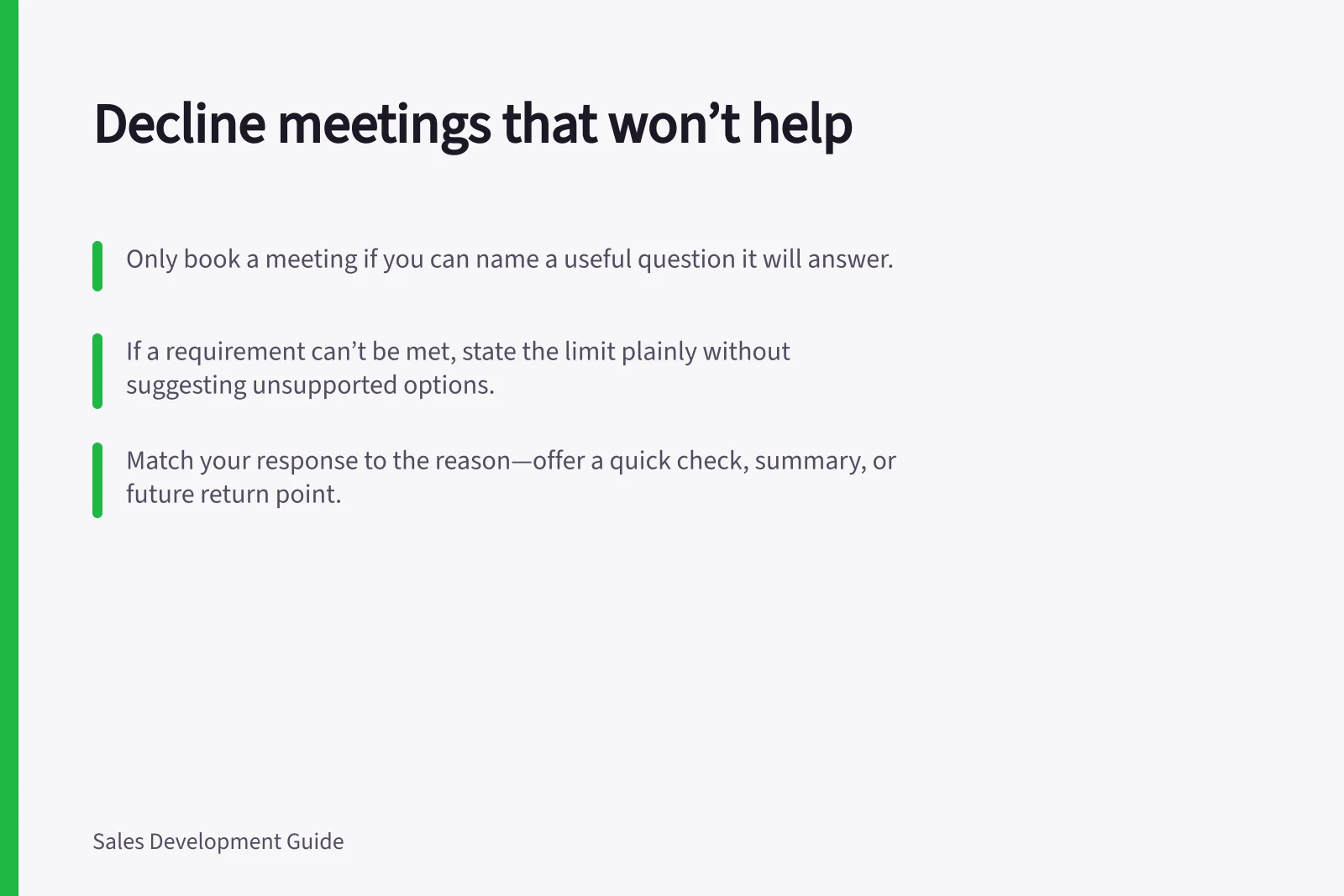
Decline to book a sales meeting if you cannot name a useful question it will answer for the prospect. A calendar invitation needs a purpose and the right participants. Without those, a short answer, a targeted check or a respectful close may serve both sides better.
Test the proposed meeting
Before offering a slot, ask yourself:
- What would the prospect learn or decide?“See our platform” describes an activity. “Check whether the required system can connect” describes a question worth resolving.
- Can our offer plausibly help?A confirmed requirement you cannot meet should be disclosed now. If fit is merely unclear, identify the fact that would resolve it.
- Who needs to take part?Include a specialist or decision-maker when their knowledge is needed for the meeting’s stated purpose.
A prospect's willingness to be polite or curious is not enough. Equally, do not reject a useful exploratory discussion just because they cannot yet name a budget. Decide on the purpose and the available evidence.
Match the response to the reason
If the answer is already known, provide it without a meeting. If one technical or operational fact is missing, offer a short written requirement for the prospect to check internally. If the buyer is considering a change later, ask whether they want to return when a specific event occurs. If your offer cannot meet a stated requirement, explain the limit plainly.
For example, a hypothetical prospect asks for a demonstration but says all data must remain in an environment your offer cannot support. A useful response is: “Based on that requirement, I do not think a demonstration of our current approach would answer your need.
I can send a brief summary of the deployment requirements if that would help your review.” Do not imply an unsupported deployment option is available or planned.
Say no without turning it into an objection contest
Thank the prospect for explaining the situation. State the specific reason the meeting would not help and offer only an alternative you can deliver. Leave room for correction: a misunderstood requirement may change the assessment. If the prospect confirms the mismatch or declines further discussion, close the enquiry.
Record the decision so another representative does not send the same invitation. Note whether the reason was a confirmed lack of fit, a missing fact, a later timing decision or the prospect’s preference. Those distinctions determine whether future contact has a useful purpose.
A declined meeting can be a sound qualification outcome when the proposed interaction would not help the buyer make progress.