Outbound Messaging
Asking about constraints without forcing a rigid script
Explore systems, resources, decision roles and timing through relevant follow-up questions instead of a fixed qualification script.

Section
Outbound Messaging
Explore systems, resources, decision roles and timing through relevant follow-up questions instead of a fixed qualification script.
Outbound Messaging
Match an outbound sales request to the prospect’s demonstrated interest and give each proposed action a clear purpose.
Outbound Messaging
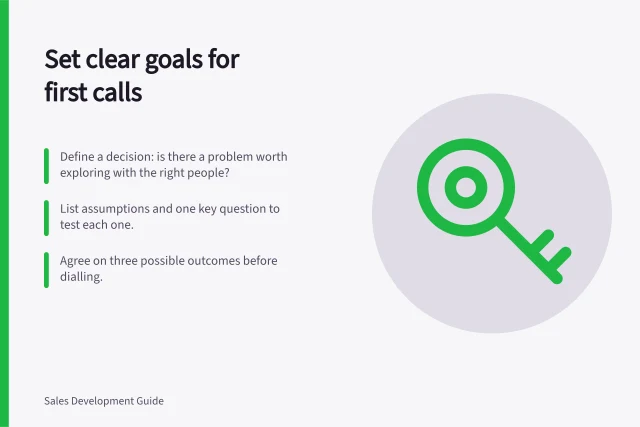
An initial call objective should describe what you need to learn and what the prospect can gain.
Outbound Messaging
Choose a sales development outcome that reflects appropriate next decisions, including accepted discussions, useful referrals and justified closes.
Outbound Messaging
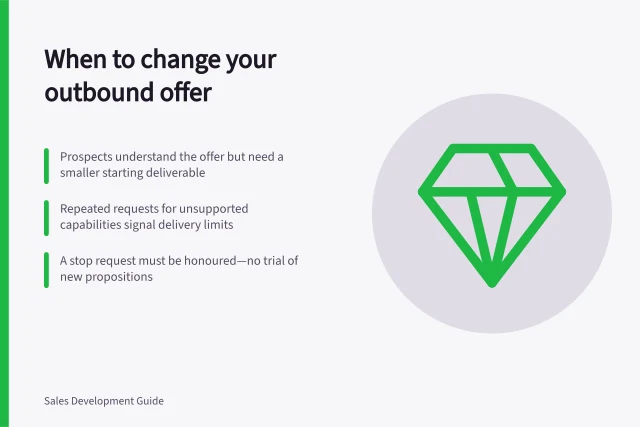
Use prospects’ stated reasons and delivery limits to decide whether to clarify the message, change the ask or revise the offer.
Outbound Messaging
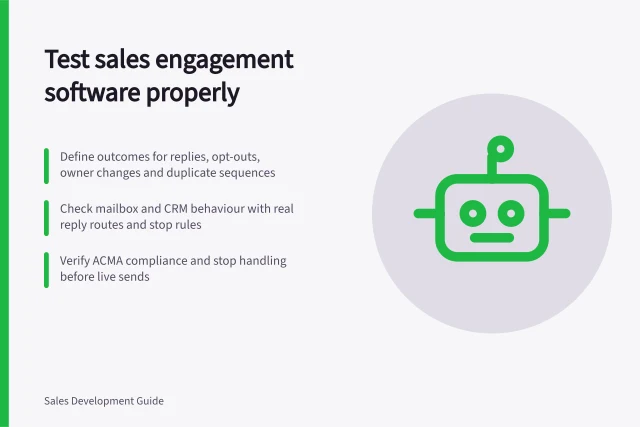
Plan a bounded engagement pilot around replies, opt-outs, duplicates, CRM sync and a permitted live batch.
Outbound Messaging
Make every follow-up add a specific useful reason to contact rather than repeating the first pitch.
Outbound Messaging
Write an outbound opening that connects a checked account fact to a useful question without pretending to know the prospect.
Outbound Messaging
Build outbound follow-up around a reason to contact, shared ownership, clear stop rules and compliant channel preferences.
Outbound Messaging
A sales call can end well without another meeting.
Outbound Messaging
Audit prospect, product and result claims in an outbound email, then narrow, verify or remove wording the evidence cannot support.
Outbound Messaging
Write B2B outbound messages with a relevant reason, a supportable offer and a next step that fits the prospect’s interest.