Outbound Messaging
Part of Outbound follow-up sequences
Giving each follow-up a distinct reason to exist
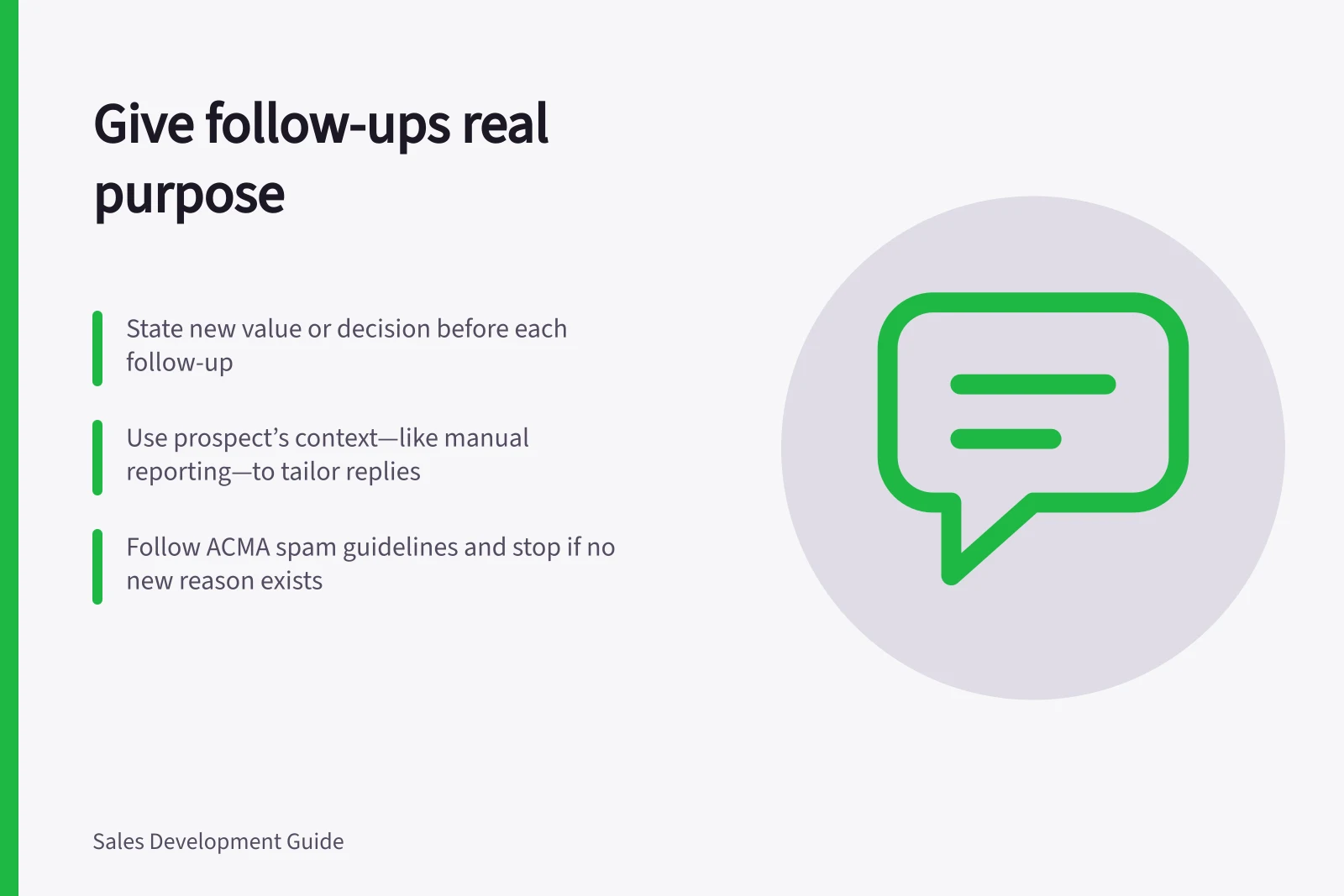
Make every follow-up add a specific useful reason to contact rather than repeating the first pitch.
“Just checking in” rarely gives the prospect a reason to spend time on another message. Before scheduling a follow-up, state the new value or decision it brings. If you cannot, stop or wait for a genuine change.
Build from the prospect’s context
The first contact might ask whether a specific workflow problem is relevant. A second could clarify one option the prospect raised, provide a short factual example or answer a known objection. A later message might offer a simple decision: discuss it, direct you to the right person or close the thread.
Do not recycle the same claim with a new subject line.
For a hypothetical software vendor, a prospect who mentioned manual monthly reporting may appreciate an explanation of which data must be prepared before a demonstration. An unrelated product announcement does not follow from that conversation. Record the source of the concern so the message does not pretend to remember a discussion that never happened.
Keep relevance within permission
The ACMA publishes guidance on avoiding spam; review it before scheduling a sequence. A requested answer to a specific enquiry should be kept distinct from an ongoing promotional sequence.
Judge each step by helpful replies and clear declines, not only open rates. If most contacts ignore a touch and some complain about repetition, revise the premise or remove it. The sequence should become shorter when there is no new reason to contact.
Pros and Cons of Generic vs. Contextual Follow-Ups
- Pros of contextual follow-upsHigher engagement, builds trust, aligns with ACMA spam guidelines, respects recipient's time.
- Cons of generic follow-upsIncreases risk of being marked as spam, damages credibility, wastes time for both parties.
Key Metrics to Evaluate Follow-Up Effectiveness
- Helpful replies rate
- Track responses that advance the conversation, not just opens.
- Decline rate
- Monitor clear no’s or disengagement to refine messaging.
- Spam complaints
- Ensure messages comply with ACMA rules to avoid penalties.